what to do when knee losing cishion on old age
No doubt virtually it, our bodies modify as we historic period. But, how nosotros age takes its toll on u.s.a. at different rates based on genetics and lifestyle. In fact, at that place's growing evidence that many of the changes we associate with crumbling are actually due to a sedentary lifestyle rather than the crumbling procedure itself. That'southward encouraging news for those of united states who programme on staying active as long as possible. Information technology'south nice to know we have some control over aging!
One of the biggest concerns is the age-related loss of muscle tissue. In fact, people who don't do lose equally much as 3 to 5% of their musculus mass each decade later on the age of 30. In add-on, muscle strength declines by 20 to 40% between the ages of 20 and 70. This explains why so many older adults are sarcopenic and frail. But, what nearly other structures that help agree our skeleton together and continue information technology function, like tendons and ligaments? How practise they change with age?
Good for you Tendons and Ligaments
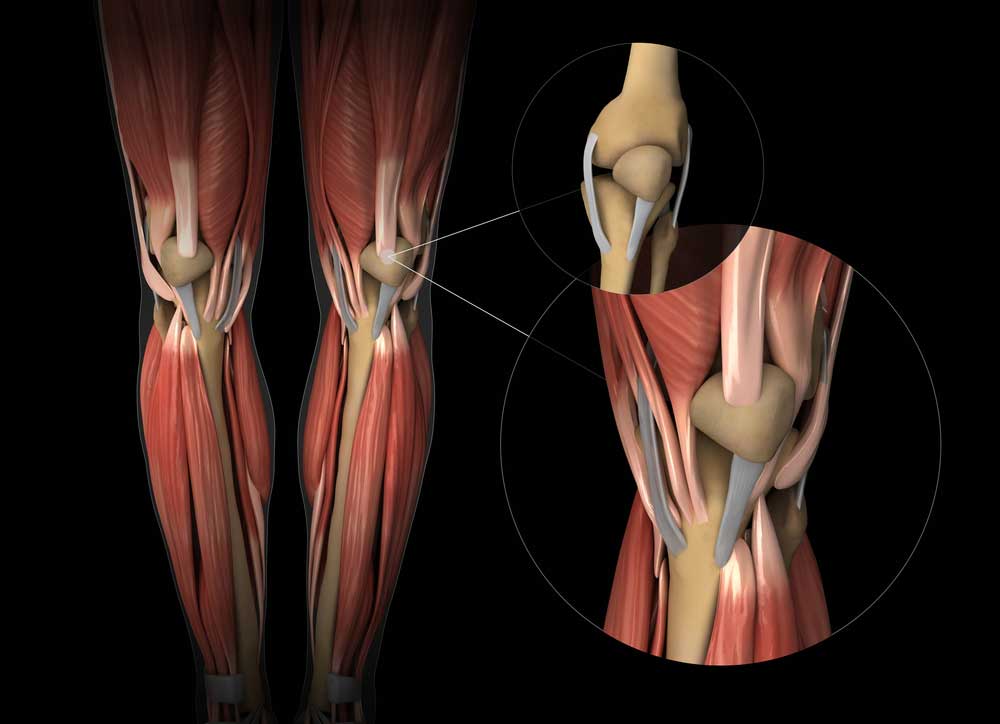
For motion to occur, skeletal muscle must contract but they need the help of tendons and ligaments. Tendons are tough, connective tissue that connects a skeletal muscle to a bone. In dissimilarity, a ligament consists of bands of thick connective tissue that bring together bone to bone. Tendons are strong because they are fabricated upwardly of closely-packed bundles of collagen that are cross-linked together to give them more tensile forcefulness. When you contract a muscle, the tendon pulls on the bone and causes it to movement.
I of the biggest and toughest tendons in your body is the Achilles tendon. Still, even this tough tendon is easily injured. It's non uncommon for people to strain or fifty-fifty tear their Achilles tendon, especially runners. For professional runners, this can be a career-ending injury. While you see a lot of Achilles tendon injuries in immature, athletic people in their 20'south, the 2d top in incidence is around the historic period of 70. Unfortunately, when an Achilles tendon ruptures in an older person, they often experience reduced role in the involved limb that can get chronic. If they take surgery for the rupture, they're more likely to experience complications. So, information technology's important to keep tendons as salubrious as possible.
More than commonly than a tear or rupture of a tendon is tendonitis or tendonosis due to irritation of a tendon or tendons. This near commonly occurs when people do the same repetitive motions over and over. This blazon of chronic stress irritates the tendon to the point that it becomes painful. In an older person, tendonitis has a higher risk of becoming chronic.
How is an Older Tendon Different from a Younger One?
What happens to tendons and ligaments as you age? The biggest modify that your tendons undergo with historic period is increased stiffness. Tendons get stiffer because they lose water and the underlying fabric, collagen, and elastin, becomes more disorganized. This is partially due to a reduction in blood flow to the tendons and so that the tendon gets less oxygen and nutrients. The tendon cells themselves showtime to divide more than sluggishly, a phenomenon known equally cellular senescence. Plus, the tendons go less capable of repairing themselves as they age as the cellular mechanisms they use for repair become less efficient. Some of these same processes impact the aging of ligaments besides.
One style an older tendon differs from a younger one is the older one is weaker and more prone toward injury. How does a tendon weaken? Equally mentioned the collagen in a younger tendon is tightly cross-linked giving it greater tensile strength, upward to a point. Simply, a tendon can become so tightly cross-linked that it becomes rigid. This rigidity actually makes the tendon weaker and more prone toward violent. The collagen content of an older tendon is oftentimes greater than a younger one, but elastin, the component that gives the tendon elasticity goes down. This increased rigidity and loss of elasticity reduces the force of the tendon and makes it more injury prone.
Ligament and Tendon Aging: What Can You Do about It?
Research shows genetics and lifestyle both take an affect on the aging of the tendons and ligaments. Hormonal changes that go along with crumbling also speed up how apace these ligaments and tendons historic period. For example, people who endure from an underactive thyroid accept low levels of the thyroid hormone, thyroxine. Thyroxine is important for keeping tendons youthful and resistant to injury. And then, people with hypothyroidism are more than prone to tendon injuries.
Sex activity hormones play a function too. Estrogen and testosterone aid forbid the excessive breakdown of collagen. As such, they help to go on ligaments and tendons youthful. One time women go through menopause, they have lower levels of estrogen and testosterone and this may contribute to the crumbling of these structures. In addition, for unknown reasons, people with diabetes are more than prone to chronic tendonitis or tendonosis.
What about exercise? Studies evidence that consistent exercise over long periods of time enhances the collagen content of tendons, increases the thickness of tendons, and improves their strength. In contrast, being sedentary decreases blood flow to tendons and ligaments. This, in plow, reduces the delivery of oxygen and nutrients to these structures.
The Bottom Line
Tendons and ligaments become stiffer and more prone towards injury with age, but as the U.s. Public Wellness Service points out, exercise is i of the pinnacle v priorities for reducing the risk of early on disability or expiry. Make sure you're grooming smartly by using adept course, varying the exercises you do, and by not overtraining. It'south also important to do a warm-up before ramping up the intensity of a conditioning. You never want to commencement an exercise session with cold muscles or tendons. The five or 10 minutes you invest in a warm-upward is time well spent. Accept advantage of information technology!
References:
Sports Health. 2014 Jan;6(1):41-8. doi: ten.1177/1941738113485691.
J Anat. 2006 Apr; 208(4): 433–443.
WebMD.com. "Sarcopenia With Aging"
Podiatry Today. "Crumbling and Athletes: How Exercise Tin can Brand a Divergence"
FutureLearn.com. "How do our tendons historic period?"
Science Daily. "Why Tendons Break Downward with Historic period"
J Appl. Physiol. 68:1022–1040.
Related Articles Past Cathe:
Flexible or Not? Factors That Bear upon How Flexible Your Joints Are
The Process to Start Rehabbing an Achilles Injury
How Resistance Grooming Shapes Tissues Other Than Your Muscles
Can You Strengthen Your Tendons?
Is It Okay to Exercise With Tendonitis?
Intense Do and Gelatin: A Good Philharmonic for Your Joints?
Source: https://cathe.com/tendons-and-ligaments-how-do-they-change-with-age/
0 Response to "what to do when knee losing cishion on old age"
Postar um comentário